UNESCO World Heritage Site "Historic Areas of Baekje"
This tour introduces the Baekje Historic Areas, a UNESCO World Heritage Site in South Korea. We will visit the eight component sites remaining in Gongju, Buyeo, and Iksan, including Gongsanseong Fortress, Songsan-ri Tombs, Jeongnimsa Temple Site, and Mireuksa Temple Site, and explore the Baekje royal capital and the cultural exchange of ancient East Asia.
UNESCO World Heritage Site "Historic Areas of Baekje"
table of contents
A World Heritage Site Tracing the Ancient Capital of Baekje
One place I would recommend to anyone interested in ancient Korean history is the "Baekje Historic Area (백제역사유적지구)".
The Historic Areas of Baekje, registered as a UNESCO World Heritage Site in 2015, consists of eight late Baekje period sites located in **Gongju, Buyeo, and Iksan** in west-central South Korea.
Baekje was an ancient kingdom that lasted from 18 BC to 660 AD, and along with Goguryeo and Silla, it is one of the representative kingdoms of the Three Kingdoms period on the Korean Peninsula. The registered sites include the royal palace, fortresses, burial mounds, temples, and city walls surrounding the capital, providing clues to the politics, religion, architecture, and urban planning of the time.
Furthermore, Baekje actively engaged in exchanges with China, the surrounding regions of the Korean Peninsula, and ancient Japan. It is believed that its unique culture, which incorporated Buddhism, architectural techniques, crafts, and urban planning, influenced East Asia as well. The Baekje Historic Areas are a World Heritage Site where this history of exchange can be gleaned from archaeological sites.
The eight archaeological sites that make up a World Heritage Site
Region
World Heritage Site component
Korean
Gongju
GongSanseong castle
Likelihood
Gongju
Gongju, Songsan-ri Tombs
It's a good idea
Buyeo
Gwanbuk-ri Ruins and Busosanseong Fortress
What is the meaning of the word?
Buyeo
Jorinji Temple Site
정림사지
Buyeo
Neungsan-ri Burial Mounds
능산리 고분군
Buyeo
Ragyo
Naseong
Masuyama
Wanggung-ri Historic Site
Wanggung-ri Historic Site
Masuyama
Mirokuji Temple Site
Mireuksaji Temple
The three archaeological sites, each with its own distinct role, are registered as a single World Heritage Site as a group of heritage sites that constitute the late Baekje capital and surrounding area.
Historical regions of Baekje by area
Gongju | Fortresses and Royal Tombs of the Royal Capital, Ungjin
Gongju was the capital of Baekje from 475 to 538. At that time, it was called "Ungjin (웅진)," and a fortress and royal tombs were built there to protect the capital.
Gongsanseong Castle
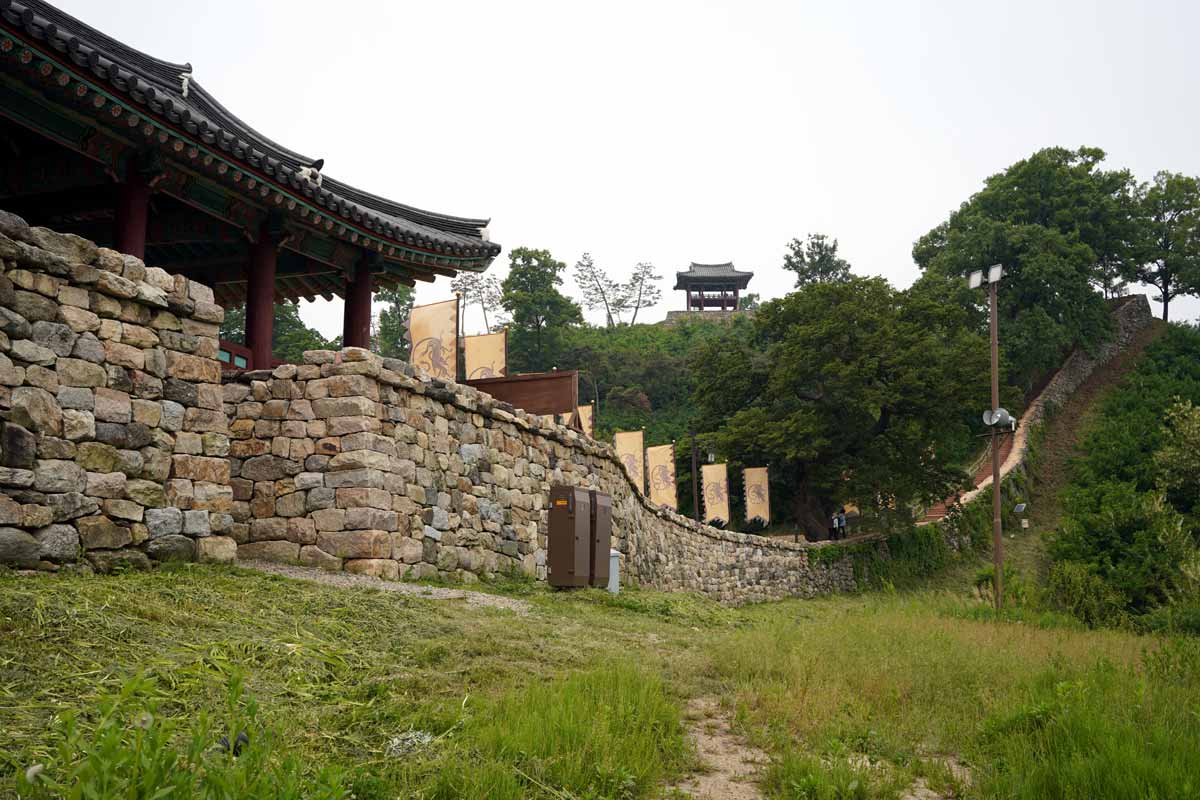
Built on a hill along the Geumgang River, Gongsanseong Fortress is a representative fortress ruin of Gongju.
After being attacked by Goguryeo, Baekje moved its capital from Hanseong to Gongju and used Gongsanseong Fortress as an important base to protect the royal palace. Today, you can walk along the fortress walls and overlook the Geum River and the city of Gongju.
Gongju Songsan - ri tombs
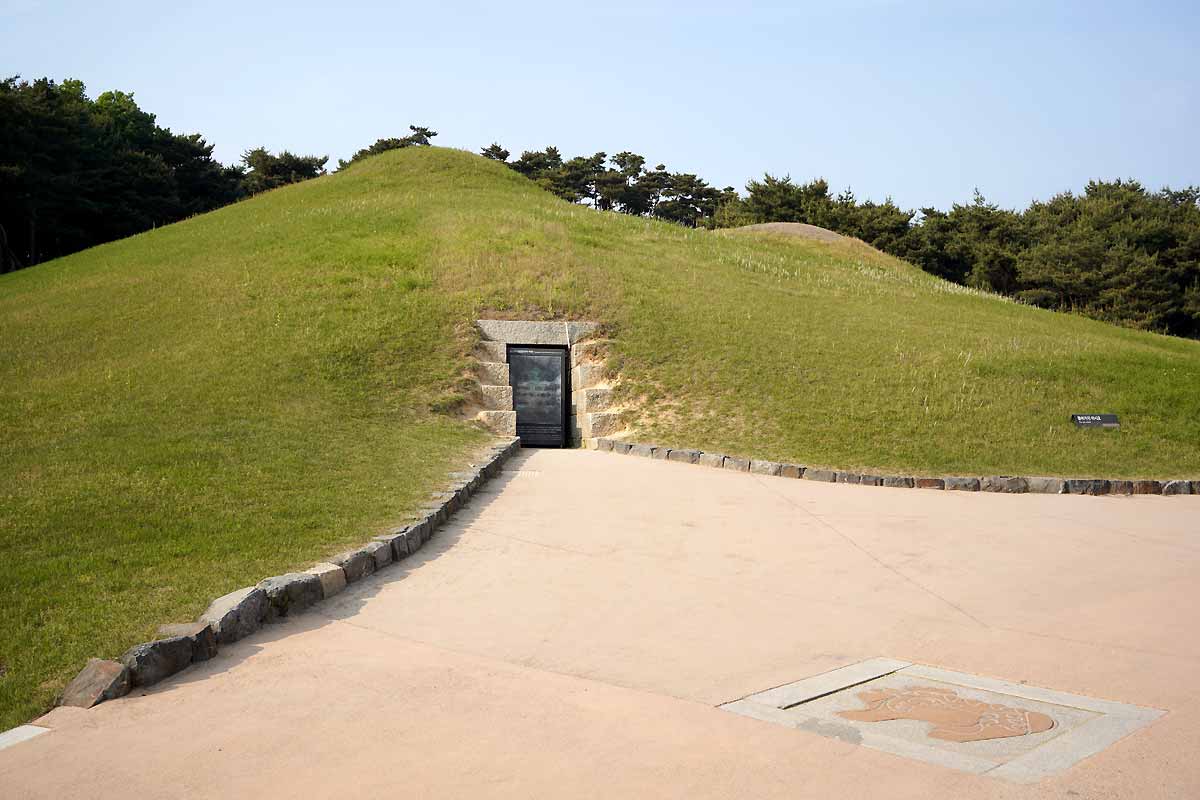
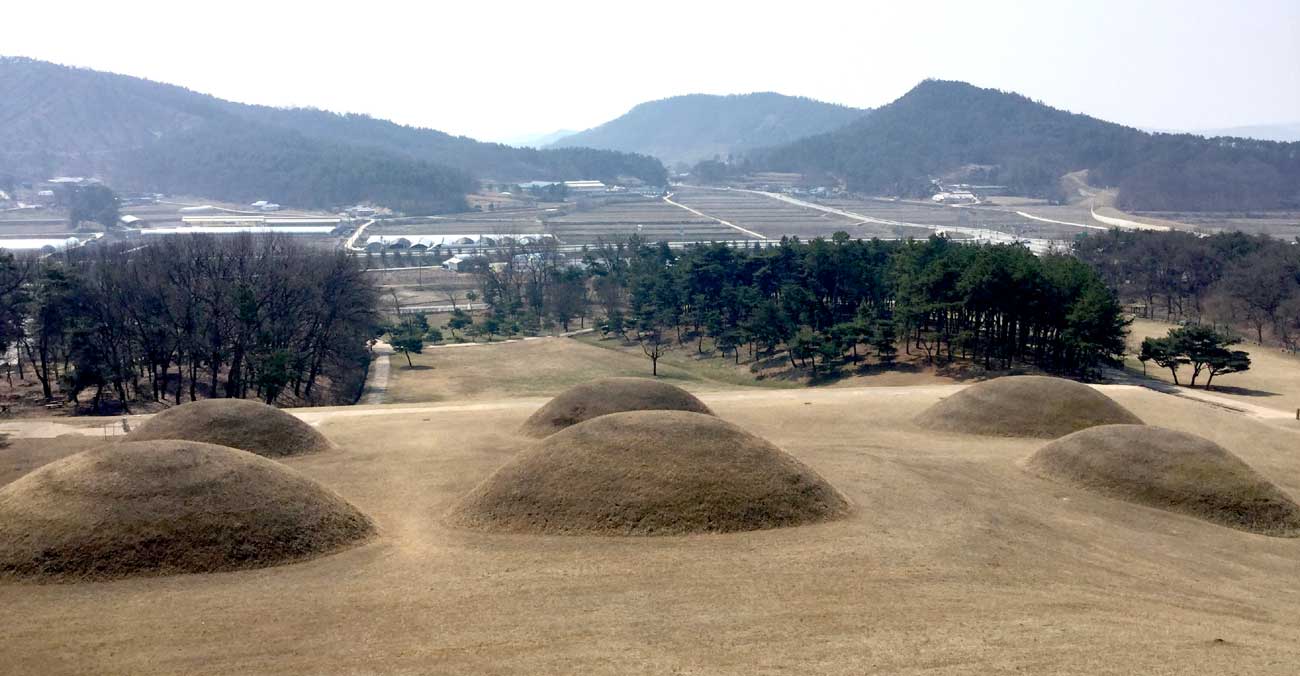
Near Gongsanseong Fortress is the Songsan-ri Tombs, a cluster of tombs belonging to the Baekje royal family.
The most famous is the Tomb of King Muryeong (무령왕릉). Discovered in 1971, the tomb yielded numerous artifacts related to the king and queen, providing important information about Baekje's royal culture and its interactions with East Asia.
In Gongju, combining a visit to Gongsanseong Fortress and the Songsan-ri Tombs allows you to efficiently see both the fortifications protecting the royal capital and the royal tombs.
Buyeo | Sabi, the last royal capital of Baekje
In 538, Baekje moved its capital from Gongju to Buyeo. Buyeo at that time was called "Sabi" and flourished as the royal capital until its fall in 660.
This region retains remnants of the royal palace, mountain fortresses, temples, royal tombs, and city walls surrounding the capital. It is an ideal area for those who want to comprehensively understand the urban structure of Baekje.
Busosanseong Fortress and Gwanbuk-ri Ruins
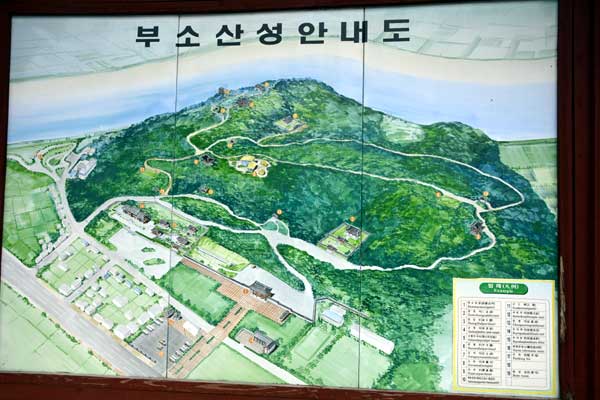
Busosanseong (부소산성) is a mountain fortress built to protect the capital city of Sabi. A well-maintained walking trail through the lush natural surroundings allows visitors to experience the city's topography while exploring the fortress ruins.
The Gwanbuk-ri site, located south of Yamashiro, is an archaeological site related to the royal palace of Baekje. The remains of large buildings, roads, and waterways indicate that Sabi was a planned and well-developed city.
Jeongrimsa Temple Site
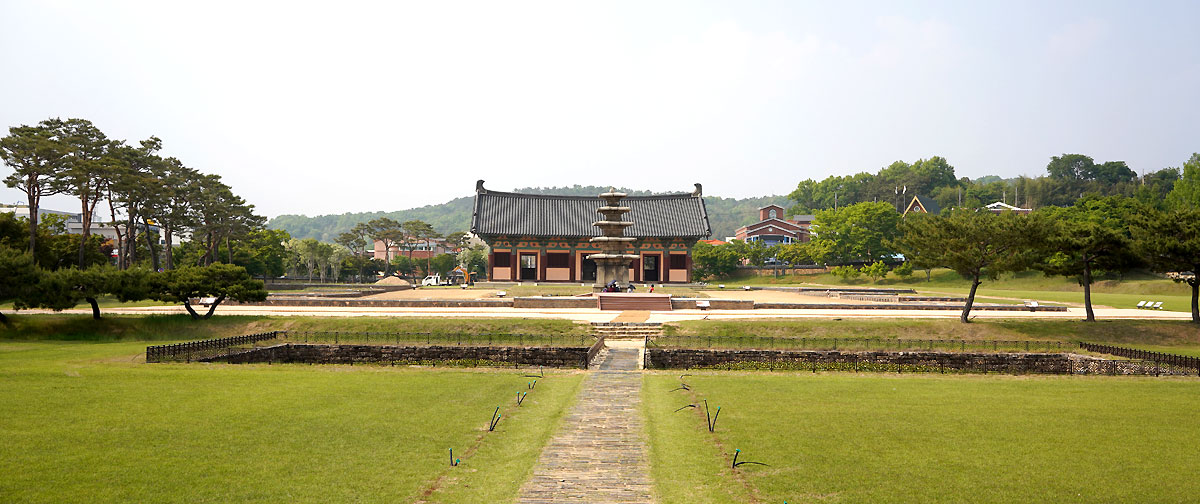
At the site of Jeongnimsa Temple, a five-story stone pagoda, representative of Baekje, remains.
This site offers a glimpse into a different Buddhist culture and stone architecture compared to royal palaces and fortresses, making it an important historical site for understanding Baekje's religious views and architectural techniques.
Neungsan-ri Tombs and Naseong Fortress
The Neungsan-ri Tombs contain tombs associated with the Baekje royal family. These tombs, built near the capital city, offer insights into the royal burial customs and the relationship between the tombs and the capital.
The Rajō was a city wall that surrounded the royal capital of Sabi. Because it was equipped with facilities to protect not only the royal palace and temples but the entire city, it is essential for understanding Baekje's urban planning.
Iksan | Baekje as seen through the royal palace and large temples
Iksan is home to ruins related to the royal palace and large temples. While Gongju offers views of city walls and royal tombs, and Buyeo provides a comprehensive overview of the capital city's structure, Iksan focuses on Baekje's political space and Buddhist culture.
Wanggung-ri Ruins
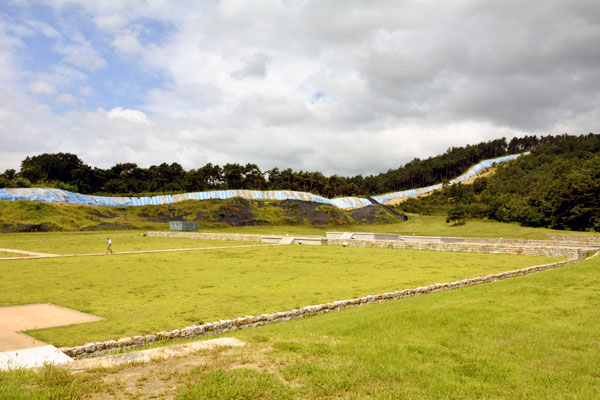
At the Wanggung-ri site, the remains of royal palace-related facilities and temples have been identified.
This site allows us to consider how the royal palace and religious facilities were arranged, making it an important site for understanding the relationship between politics and religion in Baekje.
Site of Mireuksa Temple
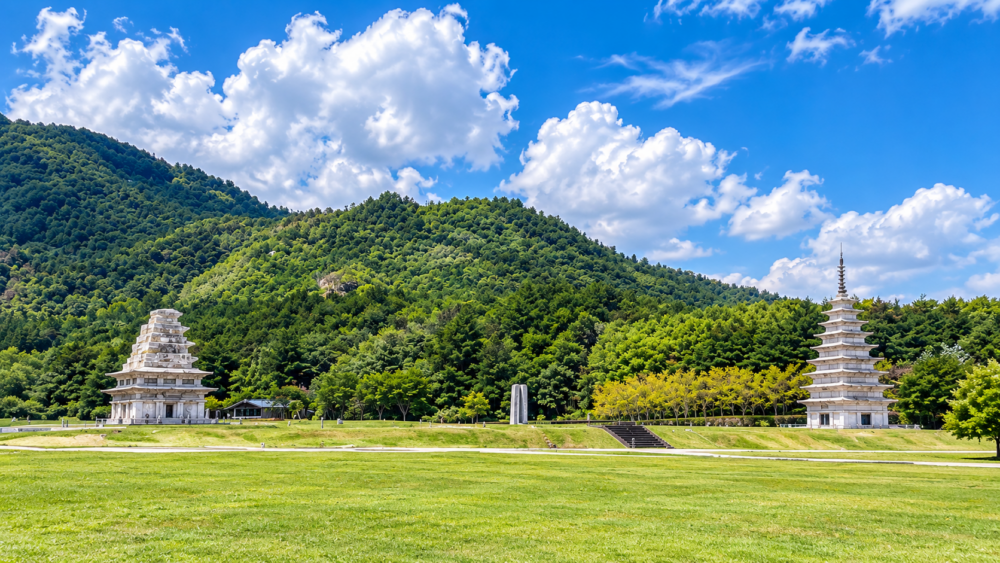
Mireuksa Temple Site (미륵사지) is a large-scale temple ruin representative of Iksan.
The vast temple grounds and stone pagodas offer a glimpse into the advanced architectural techniques of Baekje. The Mireuksa West Pagoda, in particular, is one of the most representative remains of Baekje's stone pagoda culture. The adjacent Mireuksa Site Museum offers detailed information on excavated artifacts and the temple's history.
Visiting the Wanggung-ri Ruins and the Mireuksa Temple Site together allows you to compare Baekje's politics and Buddhist culture. It's also suitable for those interested in architecture and history museums.
Highlights by purpose
The content you can learn in the Baekje historical region varies depending on the place you visit.
Gongju: The area surrounding the fortress and royal tombs of the royal capital, Ungjin.
BuyeoThis region offers a comprehensive overview of the royal capital, Sibi, through its royal palace, mountain fortresses, temples, royal tombs, and city walls.
MasuyamaA region that offers insights into Baekje's politics and Buddhist culture through its royal palace and large temples.
For those who want to efficiently learn about the history of the royal capital, Gongju is recommended; for those who want to comprehensively explore the capital of Baekje, Buyeo is recommended; and for those who want to carefully examine temple architecture and museums, Iksan is recommended.
If you want to compare the two capitals of the late Baekje period, it would be best to combine Gongju and Buyeo.
Model itinerary from Busan
1-night, 2-day tour of Gongju and Buyeo
If you're visiting the Baekje historical region for the first time, combining visits to Gongju and Buyeo will allow you to compare the two royal capitals, Ungjin and Sabi.
Day 1: Gongju
GongSanseong castle
Gongju, Songsan-ri Tombs
Exhibits related to the tomb of King Muryeong
We will tour the castle walls and royal tombs, learning about the background of Baekje's relocation of its capital from Hanseong to Ungjin, and the funeral customs of the royal family.
Day 2: Buyeo
Busosanseong Fortress
Kanbuk-ri ruins
Jorinji Temple Site
If time permits, I recommend adding the Neungsan-ri Tombs and Naseong Fortress to your itinerary. Since the historical sites in Buyeo are spread out over a wide area, it's a good idea to check the order of visits and transportation options in advance.
2-night, 3-day tour of Gongju, Buyeo, and Iksan
If you visit all three regions, you can compare the unique characteristics of each area as you explore.
Day 1: Gongju
We will visit Gongsanseong Fortress and the Songsan-ri Tombs, and explore the fortress and royal tombs of Ungjin, the capital of the late Baekje period.
Day 2: Buyeo
We will mainly visit Busosanseong Fortress, Gwanbuk-ri Ruins, and Jeongnimsa Temple Site. If time permits, we will also extend our trip to Neungsan-ri Tombs and Naseong Fortress.
Day 3: Masuyama
Visit the Wanggung-ri Ruins and the Mireuksa Temple Site to compare the structure of the royal palace with the scale of the large temple. Combining this with a visit to the Mireuksa Temple Museum will allow for a deeper understanding of the unearthed artifacts and the history of the temple.
A course centered around Mt. Yi
If you are interested in architecture or Buddhist culture, you could also plan your trip around the Wanggung-ri Ruins and Mireuksa Temple Site in Iksan.
After seeing the political space at the Wanggung-ri site, visiting the large-scale temple architecture and stone pagoda at the Mireuksa site makes it easier to understand the relationship between royal power and religion in Baekje.
Points to check before traveling
If you're traveling from Busan, it's important to decide whether to visit Gongju, Buyeo, and Iksan all at once, or to narrow down your destinations based on the number of days you have and your interests.
Also, since there are many places to walk through castles and mountain fortresses, it's a good idea to prepare comfortable walking shoes and clothing appropriate for the season.
Summary
The Historic Areas of Baekje (백제역사유적지구) are a group of eight archaeological sites that tell the history of the late Baekje period, and were registered as a UNESCO World Heritage Site in 2015.
Since the eight component sites are spread across three regions, plan your visit considering travel time and sightseeing time. In particular, in Buyeo, the ruins are spread over a wide area, so it's efficient to consider using public transportation and taxis in addition to walking.
In Gongju, the fortress of the royal capital, Ungjin, and the royal tombs.
In Buyeo, the royal palace in the capital city of Sabi, mountain fortresses, temples, royal tombs, and city walls were all located there.
In Iksan, there is the royal palace and large temples.
In this way, you can learn about the history of Baekje from different perspectives depending on the region.
Furthermore, because Baekje engaged in cultural exchange with China, the surrounding regions of the Korean Peninsula, and ancient Japan, this World Heritage site is a place where one can experience not only the ancient history of Korea, but also the history of the exchange of religion, technology, and art across East Asia.
If you'd like to explore a different side of Korean history than that of Busan or Gyeongju, consider choosing Gongju, Buyeo, or Iksan, depending on your travel days and interests, and explore the Baekje royal capital and its cultural heritage.
Baekje CityBaekje CityBaekje Gilded Bronze Incense Burner (Baekjaekeumdongdaehyangro)Baekje Building SiteSongsan-ri Tomb Model Exhibition HallThe stone chamber of King Muryeong's tomb at Songsan-ri Tomb Model MuseumThe stone chamber of King Muryeong's tomb at Songsan-ri Tomb Model MuseumSongshan-ri Ancient Tombs (King Muryeong's Tomb)Buyeo Naseong CastleBuyeo Naseong CastleWanggung-ri Historic Site / Wanggung-ri Relics Exhibition HallGongSanseong castleGongSanseong castleBuyeo Royal Tombs and Art MuseumBuyeo Neungsan-ri Tumulus Group / Buyeo Royal Mausoleum