
Located in the Dongnae district of Busan, Dongnae Eupseong Fortress is a castle ruin that conveys the history and lives of the people during the Joseon Dynasty. During the Imjin War (Japanese invasions of Korea) which began in 1592, it was the site of fierce battles in which officials, soldiers, and residents resisted the invading Japanese army.
Currently, it's a popular spot for strolling, where you can experience Busan's history by visiting the restored castle gates and walls, as well as the scenic observation deck. It's recommended for those who want to visit a historical side of Busan, a different experience from the bustling Haeundae and Nampo-dong.
History of Dongnae Eupseong
Dongnae has long been an important region for transportation and defense in the southeastern part of the Korean Peninsula. Dongnae Eupseong Fortress is believed to have been developed from the late Goryeo period to the early Joseon period and played an important role as a fortress protecting the region.
The Imjin War and the Battle of Dongnae Fortress
In 1592, when the Japanese army invaded the Korean Peninsula, fierce battles were fought at Dongnae Fortress. Song Sang-hyeon, the Dongnae governor at the time, tried to defend the fortress with his soldiers and residents, but Dongnae Fortress fell, and many lives were lost.
This battle is known as a historical event that tells the story of people who resisted the invasion to the very end. Walking through Dongnae-eupseong Fortress, you can feel that it is not just a castle ruin, but a place that conveys the determination and tragedy of the people who lived there.
The castle was rebuilt in 1731.
Dongnae-eupseong Fortress, which suffered extensive damage during the Imjin War, was extensively rebuilt in 1731 during the reign of King Yeongjo, the 21st king of the Joseon Dynasty, by Jeong Eon-seop, the governor of Dongnae.
The castle ruins visible today are the result of subsequent history and restoration work. Visiting the North Gate, Yinsen Gate, and the East, West, and North General's Platforms allows you to imagine the castle's former structure and defensive mechanisms.
Highlights of Dongnae Eupseong Fortress
1. North Gate (Pungmun)
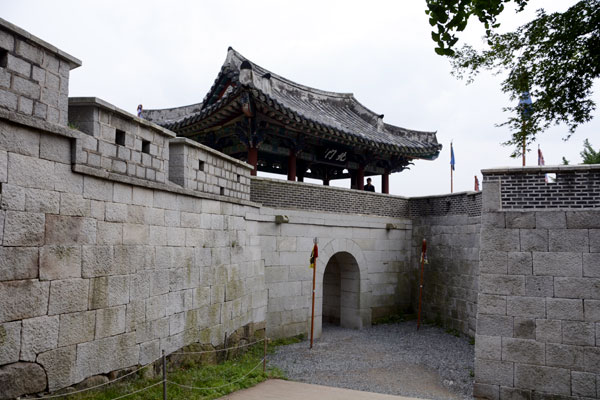
Located on the north side of Dongnae-eupseong Fortress, the North Gate is one of the most representative sights of the fortress site. The traditional gate built atop a stone wall and the surrounding fortress walls convey the atmosphere of a Joseon Dynasty fortress.
A walking path is maintained around the North Gate, allowing you to enjoy the scenery of the city walls and hills as you stroll. It's also a great spot to take photos with historical buildings as a backdrop.
2. Bukchangdae
The North Commander's Platform was one of the facilities used to direct the defense of the castle. Located on a hill, it offers a panoramic view of the city of Dongnae.
Walking along the promenade beside the castle walls, you can truly appreciate the unique location, which was once used to monitor enemy movements and direct the castle's defenses.
3. Yinsen Gate (Gate of Life)
Insaeng Gate is one of the gates built into the city wall of Dongnae-eupseong Fortress. The name "Gate of Life" comes from a legend that during the Imjin War (Japanese invasions of Korea), people who escaped through this gate were saved.
There are various theories about the origin of its name, but it is a place that evokes memories of war and the people's hopes for survival. The scenery in which the castle walls and gates blend into the surrounding residential area and greenery is also impressive.
4. Dongnae Eupseong History Museum
For those who want to learn more about the history of Dongnae Eupseong Fortress, a visit to the Dongnae Eupseong Fortress History Museum is highly recommended.
Inside the museum, you can learn about the history and structure of Dongnae-eupseong Fortress through models and other exhibits. Visiting the history museum first before exploring the fortress gates and walls will help you better understand the local scenery.
5. Walking path along the city walls
The charm of Dongnae Eupseong Fortress isn't limited to its historical ruins. Along the walking paths that wind along the hillside, you can enjoy the scenery of stone walls, trees, and quiet residential areas.
Since there are some slopes and stairs, please wear comfortable shoes. If you have any concerns about your footing, it is recommended to focus on easily accessible areas such as the North Gate rather than trying to explore the entire castle ruins.



Let's also visit the surrounding historical sites.
In addition to Dongnae Eupseong Fortress, there are many other historical sites scattered throughout the Dongnae area.
- Dongnaebu DongheonThis building was formerly the administrative office that handled the affairs of Dongnae Prefecture.
- Bokcheon MuseumThis museum allows visitors to learn about ancient tombs in the Busan region and the history of the Three Kingdoms and Gaya period.
- Bokcheon-dong TumuliThis group of burial mounds, primarily from the Gaya period, tells the history of the ancient southeastern region.
- Chungnyeolsa ShrineThis is a place to enshrine those who lost their lives defending the country during the Imjin War.
By combining these elements, you can gain a more comprehensive understanding of Busan's history, from ancient times through the Joseon Dynasty to the modern era.
Access and basic information for Dongnae Eupseong Fortress
| Item | Message |
| Name | Dongnae-eupseong Fortress |
| Korean notation | Dongnae Eupseong Fortress |
| Address | Busan Metropolitan City, Dongnae District |
| Main Attractions | North Gate, North General's Pavilion, Insaeng Gate, City Wall, Dongnae Eupseong History Museum |
| Admission fee | Exploring the castle ruins is free. |
| Acitivity Time | If you plan to visit the main spots at the castle ruins, it should take approximately 1 to 2 hours. |
| Recommended clothing | Comfortable walking shoes and clothing appropriate for the season. |
| Access | Take a bus or taxi from Myeongnyun Station on Busan Metro Line 1, etc. The nearest transportation option will vary depending on the city gate or facility you are visiting. |
*Please note that facilities such as the Dongnae Eupseong History Museum have different opening hours and closing days than the walking trails around the castle ruins. If you plan to visit these facilities, please check the latest information before your visit.
Access points
At Suan Station on Busan Metro Line 4, you'll find the "Dongnae-eupseong Imjin War History Museum" inside the station. Visiting the museum to learn about the Battle of Dongnae Fortress before exploring the fortress gates and walls will give you a deeper understanding of the region's history.
Dongnae Eupseong Fortress is spread out over a wide area, so it's convenient to combine walking, buses, and taxis depending on where you want to visit.
Summary | Walking through Busan's history at Dongnae-eupseong Fortress
Dongnae-eupseong Fortress is a historical site that preserves the memory of the fierce battles of the Imjin War and the fortress culture of the Joseon Dynasty. There are many things to discover by walking around, such as the views from the North Gate and the North Commander's Pavilion, the legends remaining at Insaeng Gate, and the quiet walking paths along the city walls.
If you're planning a trip to Busan and want to experience not only the beach and shopping, but also the local history and culture, why not visit Dongnae Eupseong Fortress? Visiting it along with the nearby Bokcheon Museum and Dongnaebu Dongheon will allow you to deeply appreciate Busan's lesser-known history.
Comment: