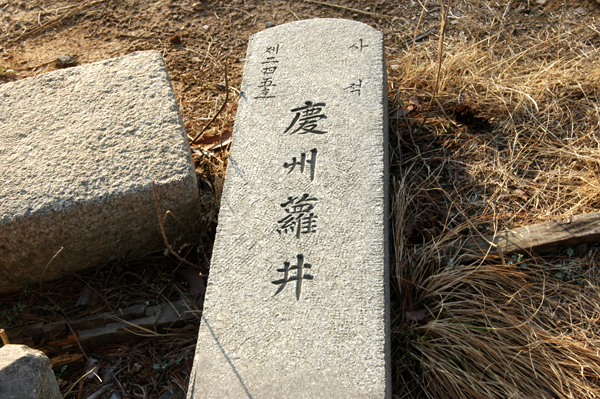
Gyeongju Namsan, located south of Gyeongju in South Korea, is a place where you can deeply experience the history of the Silla period and Buddhist culture.
Numerous temple ruins, stone pagodas, stone Buddha statues, and rock-carved Buddha images remain in the mountains. The Buddhist ruins, built utilizing the natural rocks and valleys, make the entire mountain feel like a single museum.
While Gyeongju is well-known for places like Bulguksa Temple, Seokguram Grotto, and Cheonmachong Tomb, Namsan Mountain offers a different kind of Silla culture where nature and history are intertwined.
What is Gyeongju Namsan?
Gyeongju Namsan is a mountain range located south of Gyeongju city, stretching approximately 8 km from north to south and 4 km from east to west. During the Silla period, it was cherished as a sacred site for Buddhist faith, and temples and Buddhist statues were built throughout the mountain.
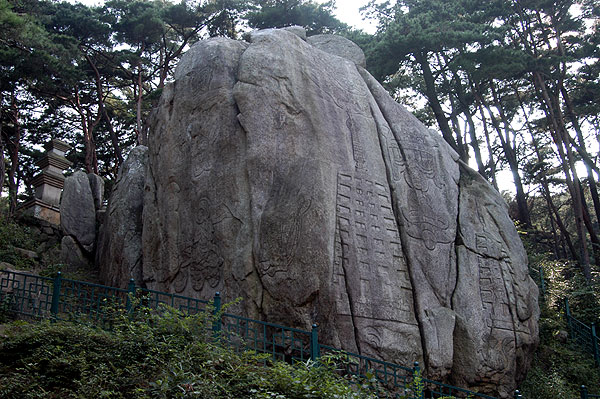
Nanshan Mountain has many valleys and peaks, and archaeological sites such as temple ruins, stone Buddha statues, and stone pagodas are scattered over a wide area. Representative sights include the rock-carved Buddhas of Samneung Valley, the group of rock-carved Buddha statues at Chilbutsuan, the rock-carved Bodhisattva in a half-seated position at Shenxianan, and the three-story stone pagoda at Longzang Temple site.
As the Namsan area of the Gyeongju Historic Areas, it is an important area that makes up the UNESCO World Heritage Site "Gyeongju Historic Areas."
The charm of Namsan lies not in seeing the ruins in one place, but in being able to visit each cultural heritage site as you walk along the mountain paths. The Buddha statues carved to fit the shape of the rocks and the topography of the valleys convey the spiritual culture of the Silla people, who worshipped nature itself.
Main attractions of Namsan Mountain in Gyeongju
1. Sanryo and the pine forest of Sanryo
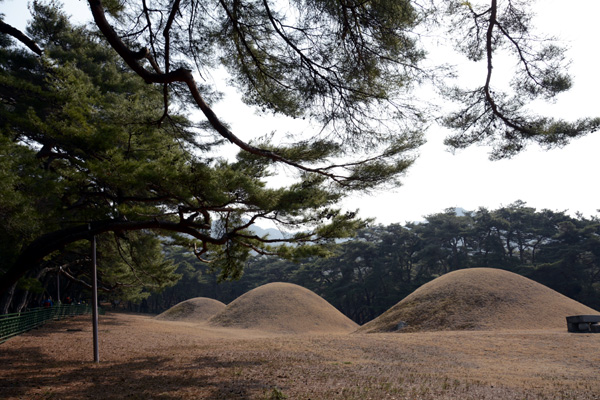
Samneung is a group of royal tombs from the Silla period located at the western foot of Namsan Mountain. Three burial mounds stand side by side amidst a quiet pine forest, creating a tranquil landscape that evokes a sense of history.
In particular, the pine forest of Samneung, with its rows of pine trees bearing gnarled trunks, is a popular spot for photography and strolling. The scenery, bathed in morning light and mist, is magical, and it is also known as a starting point for sightseeing in Namsan.
If you only plan to visit the area around Samneung, it should take about 30 minutes to an hour, including time for photography. The trail is mostly flat and not very difficult. There is a parking lot, information center, and restrooms near the entrance, but places to buy drinks are limited, so be sure to stock up on water here before heading into the mountain trails.
If you head towards Sanryo Valley from here, you'll reach a hiking trail that takes you around the stone Buddha statues and rock-carved Buddha images scattered throughout the mountains.
2. The rock-carved Buddhas of Sanryo Valley
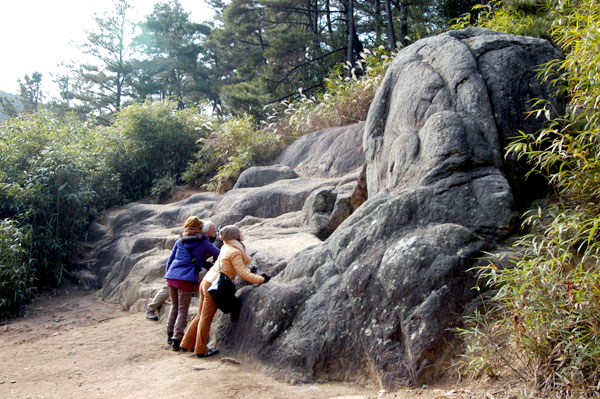
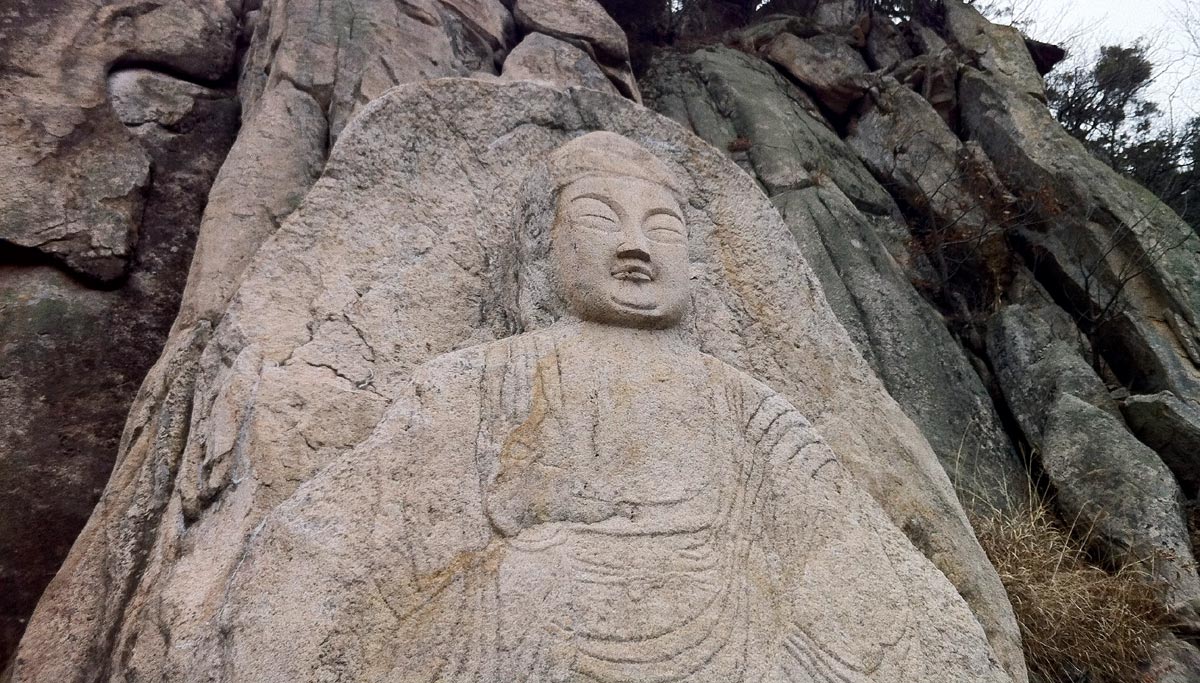
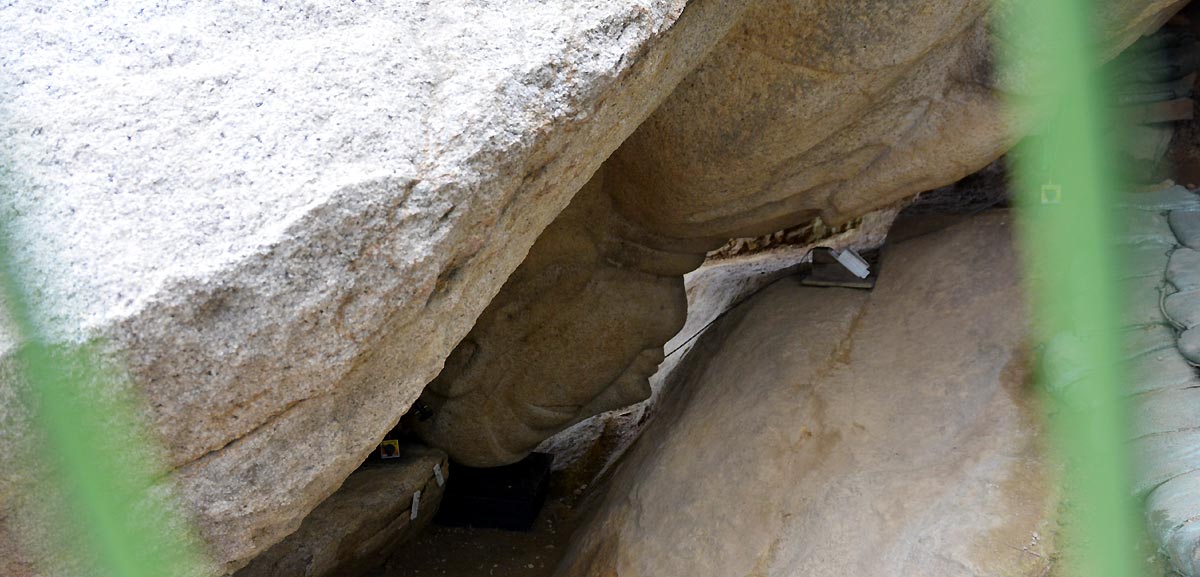
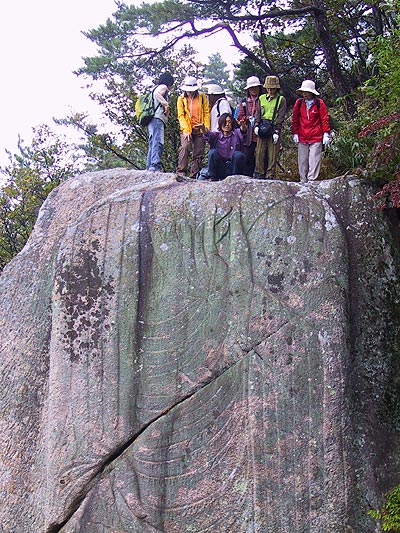
The Sanryo Valley is dotted with Buddhist statues carved from rock faces and natural stones. One of the most representative sites is the Sanryo Valley cliff-carved statue of Ka Nyorai, a seated Buddha image.
The three-dimensional sculptures, which utilize the natural rock face, are impressive and convey the faith and skill of the people of the Silla period who created these Buddhist statues in the mountains.
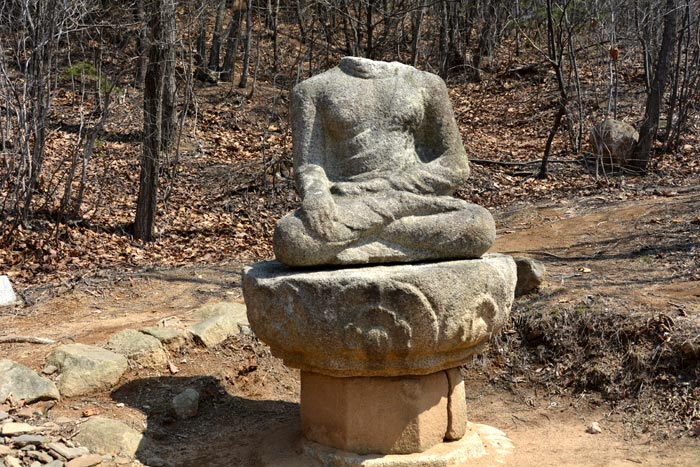
Along the gorge, you can find stone statues of seated Buddhas and groups of incised Buddhist images, allowing you to experience Buddhist art from different eras as you walk.
A round trip from Samneung to visit the main Buddha statues takes approximately 2-3 hours, including sightseeing. The difficulty level is beginner to intermediate, as there are sections with slopes, tree roots, stone steps, and rocky areas. It can be slippery after rain or in winter, so please wear hiking boots or non-slip athletic shoes.
There are toilets near the entrance to Samneung, but there are very few permanent toilets or shops further into the gorge. Use the facilities before you start and bring your own drinks and snacks. Rest areas are limited, so take breaks in safe places that do not obstruct the hiking trail or the area around the ruins.
Access is typically by taking a local bus or taxi from Gyeongju city towards Samneung. Since you may need to walk from the bus stop to the trailhead, it's a good idea to check the entrance location on a map app beforehand.
3. The group of rock-carved Buddha statues at Shichibutsu-an.
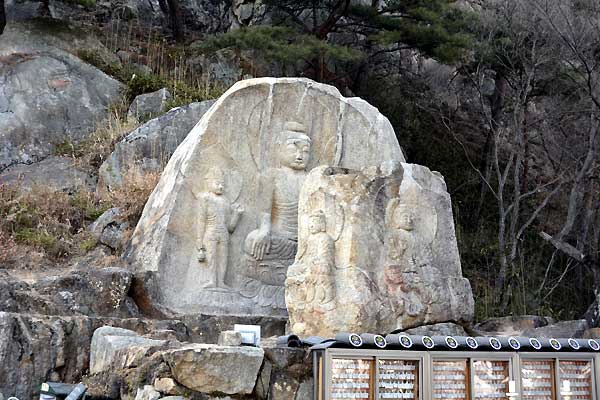
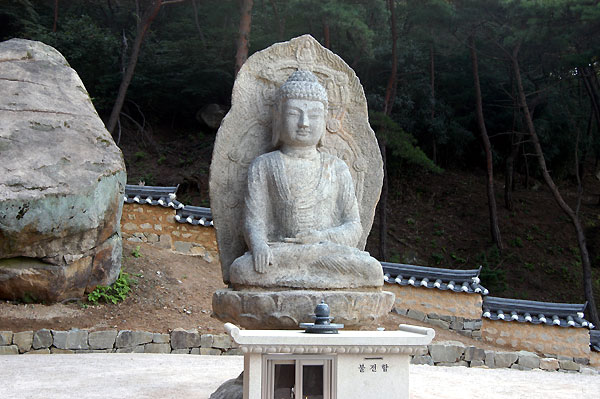
Located on the eastern side of Namsan Mountain, Chilbulam is one of the representative sites of Buddhist sculpture from the Unified Silla period.
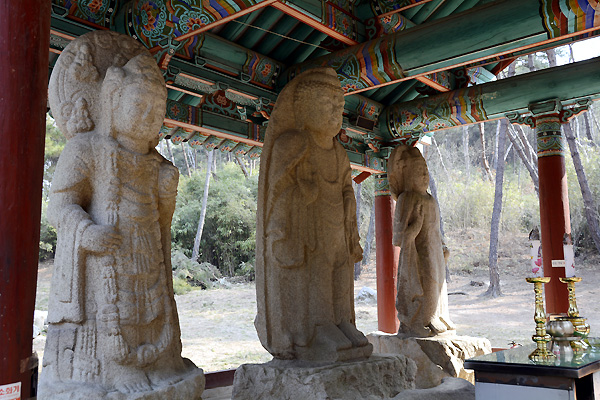
The highlights include the three Buddha statues carved into the rock face and the seven Buddha statues made from stones with Buddha images carved on all four sides. The Buddha statues, positioned against the backdrop of natural rock, possess a different kind of power and mystical atmosphere compared to those enshrined in buildings.
The most common route to Chichibutsu-an is to walk from the trailhead on the east side of Namsan Mountain, near the Unification Hall. The round trip, including sightseeing, takes approximately 2-3 hours, and the difficulty level is considered moderate due to the uphill climbs and stone steps.
While there may be toilets and parking lots near the trailhead, there are often no toilets along the mountain trail or around Shichibutsu-an, and there are very few shops. Please use the facilities before you start and prepare drinking water and snacks. Since there are few places to rest, take frequent breaks in safe, shady spots or places with good views.
To access the trail, take a bus or taxi from Gyeongju city towards the Unification Hall, then walk to the hiking trail. It's a good idea to check the return bus schedule in advance.
4. The half-seated Bodhisattva carved into the cliff face at Shinsen-an Temple
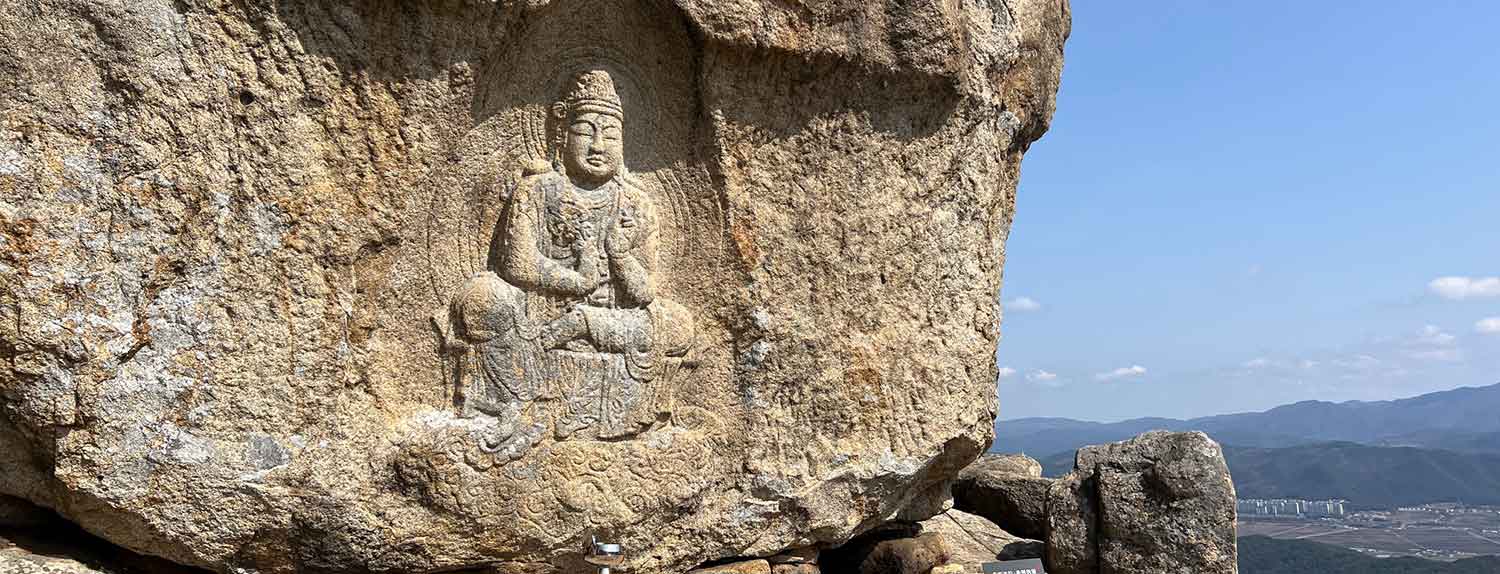
Further up from Shichibutsu-an, you will find the rock-carved Bodhisattva statue at Shinsonam.
The Bodhisattva statue carved into the large rock face is characterized by its posture, which appears as if it is sitting on a cloud. In addition to its serene expression and delicate carving, the surrounding mountain range is also a highlight.
The area around Shinsenan is known for its beautiful views, allowing visitors to enjoy both the natural beauty and cultural heritage of Nanshan Mountain at the same time.
If you plan to visit both Shichibutsu-an and Shinsen-an, allow approximately 3-4 hours for the round trip from the trailhead. The difficulty level is intermediate to slightly advanced due to the ascents, descents, and rocky sections. If you are concerned about your physical fitness, aim to reach Shichibutsu-an and decide whether to continue further based on the weather and your physical condition.
There are no toilets or shops around Shinsen-an. Be sure to bring plenty of drinks according to the season and temperature, and it's a good idea to bring a hat, sunscreen, and warm clothing. Avoid leaving late in the afternoon, and especially in autumn and winter, plan to descend the mountain before sunset.
5. The three-tiered stone pagoda at the site of Ryuzoji Temple
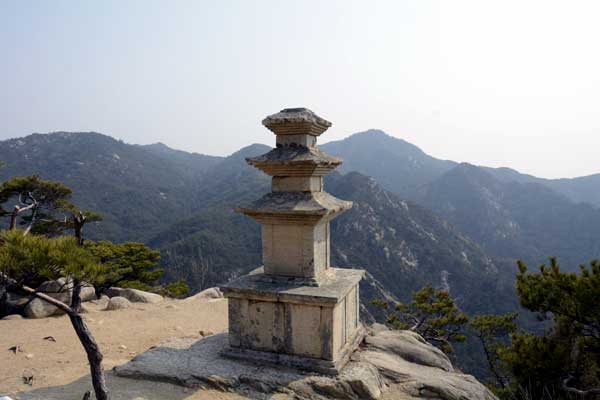
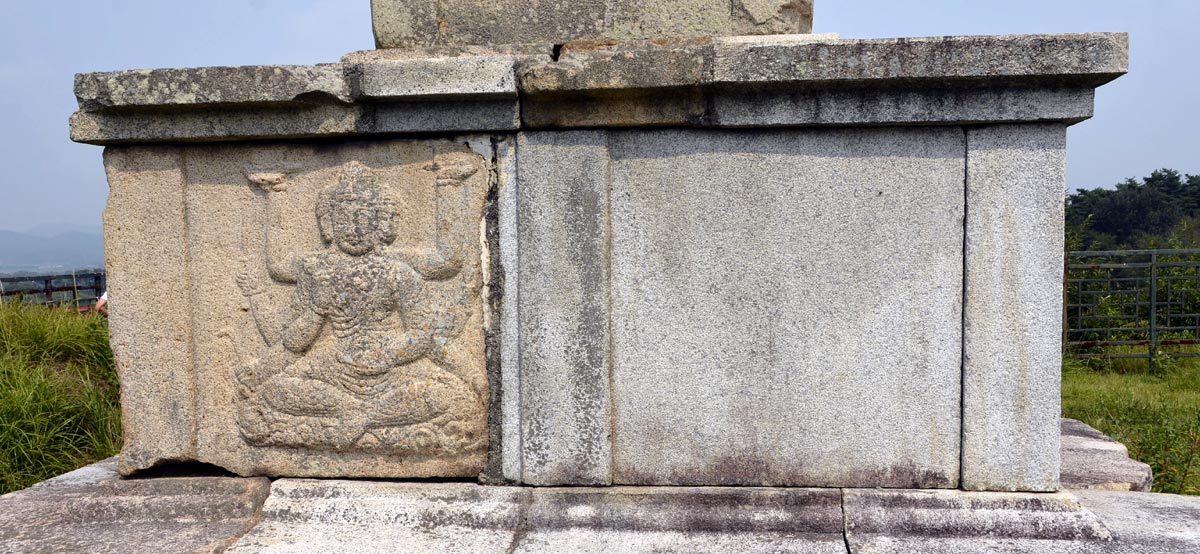
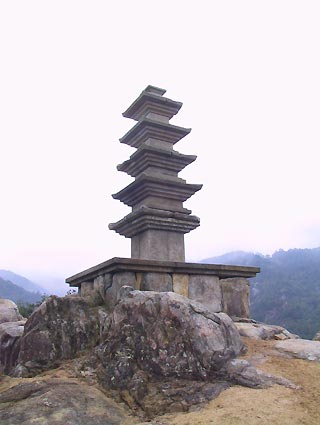
Yongjangsa Temple Site is the remains of a temple located in the mountains of Namsan. Although many of the buildings have been lost, the three-story stone pagoda and other stone artifacts allow us to imagine that a temple once stood on this site.
In particular, the three-tiered stone pagodas, built utilizing the mountain slopes and rocky terrain, are impressive for their harmonious blend with the surrounding nature.
The time required to reach the Ryuzoji Temple ruins varies depending on your starting point, but a rough estimate is 2 to 4 hours round trip. The route involves walking on mountain trails and rocky areas, making it a moderately difficult hike. If combining it with a visit to Sanryo Valley or other locations, it's advisable to plan for at least half a day.
Except for the area near the trailhead, there are no toilets, shops, or water stations in the vicinity. Please use these facilities before you depart and bring your own drinks and snacks. When around the stone pagoda, please follow the signs and take breaks in a safe place away from the cultural property.
The most common way to access the mountain is on foot from the trailhead on the east side of Namsan Mountain or from the area around the Unification Hall. Since there are multiple routes, please check your destination on a map and plan your trip so that you can return before sunset.
6. Site of Posok Pavilion
Posok Pavilion Site (鮑石亭姀) is a Silla-era historical site located on the west side of Namsan Mountain.
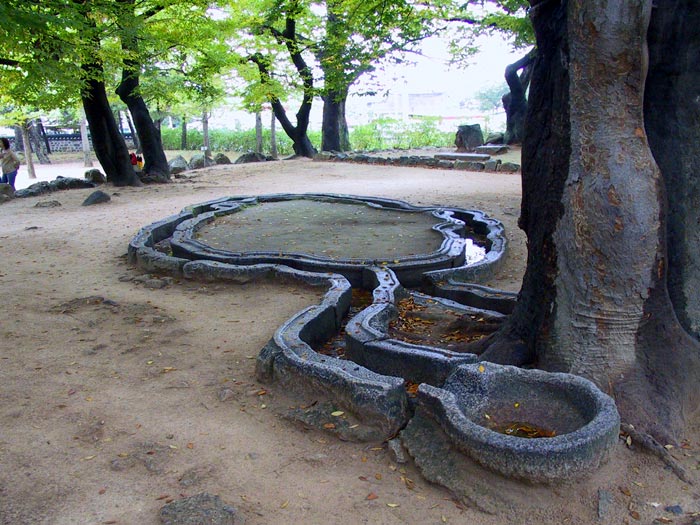
Remaining structures with grooves carved into the rocks for water to flow through are still present, and it is said that this was once a place where royalty and nobility enjoyed banquets. Although no buildings remain today, the ruins offer a glimpse into the court culture and refined tastes of the Silla period.
It is also a place that is often linked to the history of the Silla Kingdom's downfall during the Later Three Kingdoms period. Located in Namsan, an area rich in Buddhist ruins, it is a spot where you can learn about the history of politics and court culture.
This location is easily accessible without long hikes along mountain trails, taking approximately 30 minutes to an hour, and is relatively easy to visit. While restrooms and information facilities are available near the site, opening hours and facilities may change. It's recommended to bring your own drinks and snacks and check the latest information before visiting.
Access is via bus or taxi from Gyeongju city center. If combining this with a visit to Samneung, the distance is considerable, so using public transportation or a taxi is the most efficient option.
Recommended routes in Gyeongju Namsan
Beginner-friendly: Sanryo and Matsubayashi walking course
This is a short tour starting from the entrance to the Three Tombs, visiting the pine forest and the royal tombs. It takes approximately 30 minutes to 1 hour and is relatively easy.
While hiking gear isn't strictly necessary, the ground can become muddy on rainy days or after rain. There are restrooms and a parking lot near the entrance, making it a convenient starting point for a Nanshan sightseeing trip.
Classic course: A tour of Buddhist statues in Sanryo Valley
This course starts from Samneung, enters the Samneung Valley, and returns after viewing several stone Buddha statues and rock-carved Buddha images. The estimated time is 2-3 hours, and the difficulty level is beginner to intermediate.
Use the restroom near the trailhead and bring some drinks before you set off. There are very few shops or restrooms further into the gorge, so it's important to walk at a comfortable pace.
The standard route on the east side: Shichibutsuan/Shinsenan course
This course starts from the area around the Unification Hall or the trailhead on the east side of Namsan Mountain and leads to Chilbulam and Shinsenam. The round trip takes approximately 3-4 hours, and the difficulty level is intermediate to slightly advanced.
Because the trail includes uphill sections, stone steps, and rocky areas, comfortable walking shoes are necessary. Please use the restrooms near the trailhead before you start, and bring drinking water and snacks. Avoid starting late in the afternoon, and aim to complete your descent before sunset.
History-focused course: Posokjeong site and surrounding area of Samneung
This course combines the site of Posok Pavilion and Samneung. It should take about half a day, including travel time. The distance walked on mountain trails is relatively short, making it a low-difficulty course.
Since the distance between the two locations is long if you only walk, it is more efficient to use a bus or taxi. Please check the opening hours, closing days, and restroom availability of each facility before visiting.
For serious hikers: A course exploring multiple valleys and temple ruins.
If you plan to visit Sanryo Valley, Ryuzoji Temple Ruins, and Shichibutsuan Temple all in one day, you should allow at least 6 hours. Please factor in steep ascents and descents, sightseeing at historical sites, and rest breaks.
The difficulty level is intermediate to advanced, and it may be challenging for those without mountaineering experience. It is recommended to prepare drinking water, snacks, a portable battery, rain gear, and a map app, and to avoid going alone as much as possible.
Access to Namsan Mountain in Gyeongju
You can access Namsan Mountain from Gyeongju city by public bus, taxi, or rental car. However, since Namsan Mountain is quite extensive, the nearest trailhead will vary depending on your destination.
If you are visiting Samneung or Samneung Valley, head towards Samneung on the west side of Namsan Mountain. If you are going to Chilbulam Temple, Sinseonam Temple, or Yongjangsa Temple Site, the Unification Hall or the trailhead on the east side of Namsan Mountain are convenient. Posokjeong Pavilion Site is on the west side of Namsan Mountain, but it is some distance from Samneung, so it is easier to get there by combining public transportation and taxis.
Bus schedules vary depending on the route and time of day, so please check the latest timetable before departure. If you plan to use a taxi, it may be difficult to find a ride back in mountainous areas, so it's a good idea to check ride-hailing apps or taxi company contact information beforehand.
If you're renting a car, use the parking lots near each trailhead. It can get crowded on weekends and during the autumn foliage season, so arriving early is recommended. Since you can't directly drive between the mountain ruins, be sure to check parking locations and walking routes in advance.
Regarding toilets, rest areas, and food/drink
Toilets are mainly located at trailheads, parking lots, management facilities, and around major tourist attractions. They are often not available along mountain trails or near archaeological sites, so be sure to use them before you start your hike.
There are very few shops or restaurants in the mountains. Please prepare drinking water, snacks, a towel, and appropriate warm clothing and rain gear for the season in town or near the trailhead.
Rest areas are limited, except for those near the trailhead and some open spaces. Do not rest on the ruins or on the hiking trail; follow the signs and use safe locations. In summer, some sections have little shade, so it is recommended to start early in the morning.
Points to note when visiting
Many of the sights on Namsan Mountain can only be reached by hiking along mountain trails. Be sure to bring comfortable shoes, drinks, and clothing appropriate for the weather.
After rain, rocky areas and dirt paths can become slippery. Also, to avoid damaging cultural properties, please refrain from touching Buddhist statues or stone pagodas, and do not stray from the designated hiking trails.
If you plan to visit multiple historical sites, be sure to include travel time, ascents and descents on mountain trails, and sightseeing time in your schedule. In particular, if you plan to visit sites such as Shichibutsu-an, Shinsen-an, and Ryuzo-ji Temple ruins, make sure to descend the mountain before sunset.
In summer, be careful of high temperatures and dehydration, and in winter, be aware of freezing temperatures and early sunsets. Even in spring and autumn, it can get chilly in the mornings and evenings, so it's best to wear clothing that is easy to put on and take off. If you feel unwell or the weather changes suddenly, do not force yourself to go deeper into the mountains and turn back as soon as possible.
Summary
Gyeongju Namsan Mountain is a representative historical area of Gyeongju, where the Buddhist culture of the Silla period and the natural landscape are integrated.
The mountains are home to a variety of cultural heritage sites, each with its own unique charm, such as the pine forest of Sanryo, the rock-carved Buddhas of Sanryo Valley, the Buddha statues of Shichibutsuan, the Bodhisattva statues of Shinsenan, and the stone pagoda at the site of Ryuzoji Temple.
From short hikes to enjoyable sites like Samneung and Posokjeong, to more challenging routes like Chilbulam and Shinseonam, and even a full-fledged mountain climbing course visiting multiple temple ruins, you can choose a route that suits your fitness level and available time. Many mountain trails have limited toilets and rest areas, so preparation before departure and a realistic plan are essential.
Discover a world of mountain worship and stone art that you won't find just by visiting the royal tombs and temples of Gyeongju. Enjoy a journey that allows you to feel the thousand-year history of Silla while walking through nature.
Basic Information
| Item | Message |
| Tourist spot name | Gyeongju Namsan |
| Korean notation | It's the place to be |
| Address | Namsan area, Gyeongju City, Gyeongsangbuk-do |
| Highlights | Samneung, Samneung Valley, Chilbutsuan, Shinsenan, Ryuzoji Temple Ruins, Posokjeong Pavilion Ruins, etc. |
| Major features | The site features scattered remnants of Silla-era temples, stone Buddha statues, rock-carved Buddha images, and stone pagodas. |
| world Heritage | Namsan area of the Gyeongju Historic Areas, a UNESCO World Heritage Site. |
| Admission fee | Please check the information for each spot. |
| Acitivity Time | A short stroll at the foot of the mountain is recommended, while a half-day hike is a good starting point. |
| Recommended clothing | Comfortable walking shoes and clothes that are easy to move in |
| Points to note | Since the ruins are scattered over a wide area, please check the route in advance. |
Access
| Departure point and mode of transportation | Access |
| From Gyeongju city center by car | Move according to your desired trailhead, such as Samneung or Namsan-dong. |
| From Gyeongju Bus Terminal | Take a local bus bound for Samneung or Unification Hall. Check the routes and service status in advance. |
| Sanryo Course | Enter the hiking trail from the vicinity of Sanryo and visit the stone Buddha statues and rock-carved Buddhas in the valley. |
| Shichibutsuan/Shinsenan Course | The hike starts from the trailhead on the east side of Namsan Mountain. There are also trails that begin around the Unification Hall and Namsan-dong area. |
* Gyeongju Namsan Mountain is extensive, so the nearest trailhead and access methods vary depending on your destination. Some guides suggest that the Chilbulam/Shinseonam course is approximately 7.5km round trip from the vicinity of Tongiljeon Hall and takes 3-4 hours.