
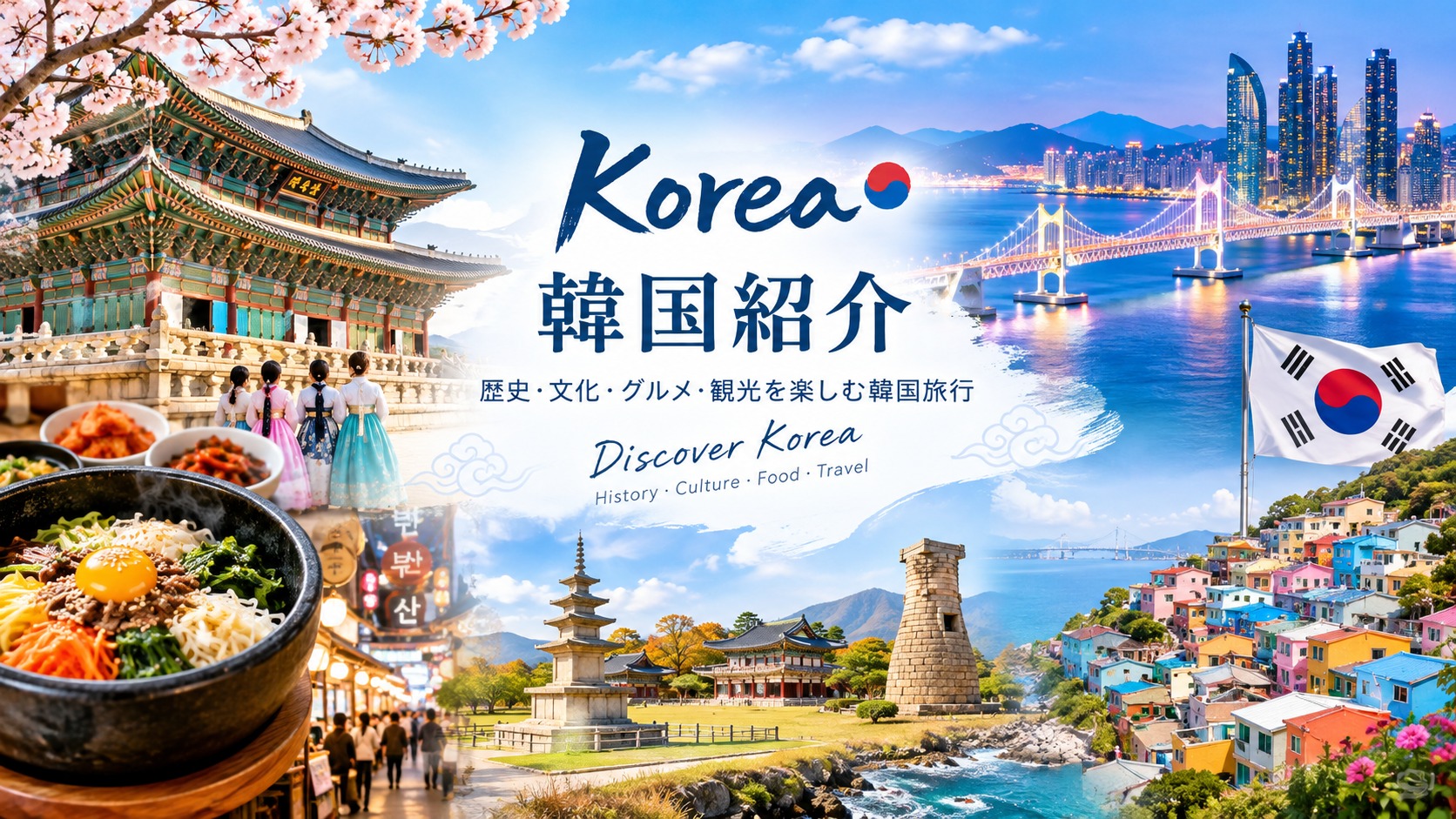
South KoreaA trip to South Korea to enjoy history, culture, food, and sightseeing.
South Korea (Republic of Korea) is a country where you can enjoy both a rich history and traditional culture passed down through generations, as well as modern attractions such as K-pop, Korean dramas, cafes, shopping, and gourmet food, all at once.
South Korea is close to Japan and easily accessible by plane or ferry, making it perfect for first-time overseas travelers. With the same time zone as Japan and many facilities offering Japanese signage and services, it's an attractive destination even for those unfamiliar with international travel.
Busan, in particular, is one of South Korea's major cities closest to Japan. With its open streets surrounded by the sea and mountains, fresh seafood, vibrant markets, and historical tourist spots, you can enjoy a different kind of Korean charm than Seoul.
Busan is a recommended travel destination for both those visiting Korea for the first time and those who want to explore Korea beyond Seoul.
What kind of country is South Korea?
The official name of South Korea is "Republic of Korea (대한민국)," and in English it is called "Republic of Korea."
The capital is Seoul (서울), and the country's land area is approximately 10 square kilometers. It is located on the southern side of the Korean Peninsula and is surrounded by the sea on three sides: east, west, and south.
South Korea is a mountainous country, with mountains covering approximately three-quarters of its land area. Therefore, even in urban areas, you can easily experience nature, such as mountains and the sea. Busan, in particular, offers the opportunity to enjoy coastal and mountain scenery in close proximity, allowing for a trip that combines city exploration with nature sightseeing.
Furthermore, Korea has four distinct seasons: spring, summer, autumn, and winter. Depending on the season you visit, you can encounter different attractions, such as cherry blossoms and azaleas in spring, swimming in the sea in summer, autumn leaves in fall, and snowscapes in winter.
In Busan, you can enjoy seasonal travel experiences, such as strolling along the beach in spring, visiting the beach in summer, enjoying a refreshing walk through the city in autumn, and admiring winter illuminations and warming hot pot dishes.
Korean history and culture
Korea has a long history that stretches from ancient times to the present day.
In ancient times, kingdoms such as Goguryeo, Baekje, and Silla flourished, and later, the history was passed down to Goryeo and Joseon.
Even today, various historical sites remain throughout South Korea, including royal palaces, castle ruins, ancient tombs, temples, and traditional houses. The opportunity to experience historical buildings and culture right next to modern cityscapes is one of the attractions of traveling to South Korea.
In particular, Gyeongju (경주) is a city that was once the capital of the Silla Kingdom and has so many historical sites that it is called an "open-air museum."
In Gyeongju, you can visit places like Bulguksa Temple, Seokguram Grotto, Daereungwon Tomb, Cheonmachong Tomb, Cheomseongdae Observatory, Donggung Palace and Wolji Pond, and experience the history and culture of the Silla period.
If you venture from Busan to Gyeongju, you can enjoy a tranquil, historically rich cityscape that is quite different from the seaside city of Busan. This area is also recommended for those who want to add another destination to their Busan trip.
South Korea boasts numerous cultural heritage sites registered as UNESCO World Heritage Sites. While enjoying sightseeing, you can experience firsthand the rich history of Korea, spanning from ancient times to the modern era.
Korean alphabet, "Hangul"
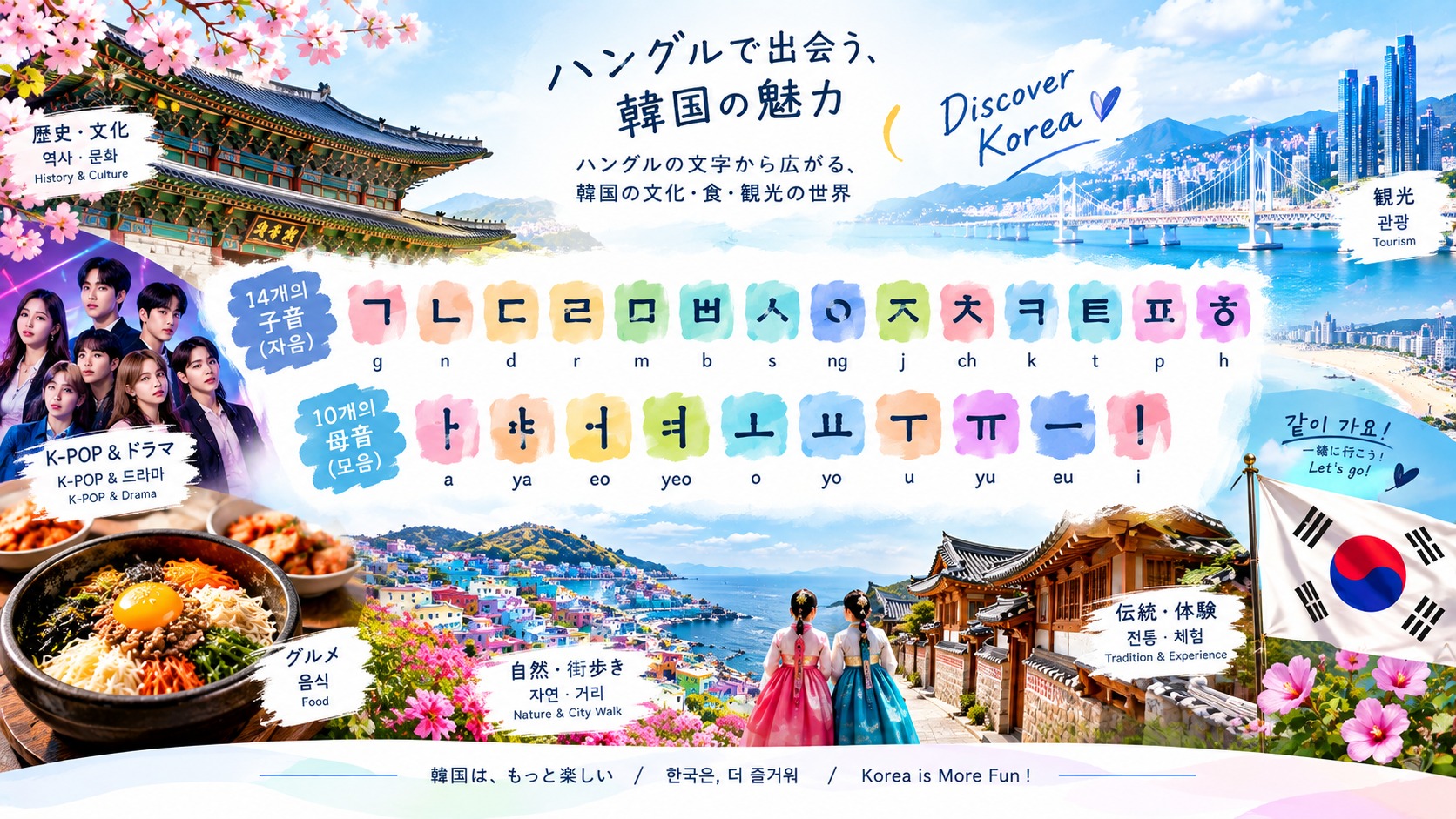
The language spoken in Korea is Korean.한국어The writing system uses Hangul (한글).
Hangul was created in 1443 by King Sejong the Great of the Joseon Dynasty and promulgated in 1446 as "Hunminjeongeum."
These unique characters were created with pronunciation in mind, and you'll see them everywhere you walk around Korea, on signs, menus, station names, and more.
Learning some basic Korean phrases like "안녕하세요 (Annyeonghaseyo/Hello)" and "감사합니다 (Kamsahamnida/Thank you)" before your trip will make your interactions with locals much more enjoyable.
In South Korea, October 9th is celebrated as "Hangul Day (한글날)".
Currently, Hangeul is made up of 14 consonants (ㄱ ㄴ ㄷ ㄹ ㅁ ㅂ ㅅ ㅇ ㅈ ㅊ ㅋ ㅌ ㅍ ㅎ) and 10 vowels (ㅏ ㅑ ㅓ ㅕ ㅗ ㅛ ㅜ ㅠ ㅡ ㅣ). Hangeul is considered a scientifically superior alphabet because it can record a very large number of sounds by combining 24 consonants and vowels.
Korean food culture
One of the great joys of traveling to South Korea is the wide variety of Korean cuisine.
In addition to dishes well-known in Japan, such as kimchi, bibimbap, samgyeopsal, bulgogi, naengmyeon, jeon, and tteokbokki, you can also enjoy regional dishes that are unique to each area.
In Korea, a food culture of sharing meals together is deeply rooted. Whether it's grilling meat at a yakiniku restaurant, trying street food at a market, or dining with locals at a local eatery, the meal itself becomes a memorable part of the trip.
Busan is particularly famous for its dishes made with fresh seafood.
At Jagalchi Market (자갈치시장), you can enjoy fresh seafood. It's a popular spot where you can enjoy sashimi, grilled fish, and other seafood dishes while experiencing the lively atmosphere unique to a market.
Also, you should definitely try Dwaeji Gukbap (돼지국밥), a Busan specialty made with pork. Dwaeji Gukbap, a warm soup served with rice, is perfect for breakfast or a light meal.
One of the joys of traveling in Korea is exploring markets, restaurants, and street food stalls while sampling local cuisine.
Seoul and Busan: Their respective charms
Seoul, the capital of South Korea, is a metropolis where royal palaces and traditional streets coexist with skyscrapers and large shopping complexes. It offers a wealth of urban entertainment, including shopping, cafes, and tours of filming locations for Korean dramas.
On the other hand, Busan is a leading port city in South Korea, offering beautiful coastlines and mountains, vibrant markets, and an abundance of seafood dishes.
One of Busan's charms is the stark contrast between its tourist spots. Haeundae offers both open beaches and views of skyscrapers, Gwangalli boasts stunning night views of the Gwangan Bridge across the sea, Nampo-dong offers markets and shopping, and Gamcheon Culture Village features colorful streets.
Busan has the following popular tourist attractions:
- Haeundae: Busan's representative beach and seaside townscape
- Gwangalli: A beautiful coastline and night view overlooking the Gwangan Bridge.
- Nampo-dong: A bustling area where you can enjoy markets, gourmet food, and shopping.
- Gamcheon Culture Village (감천문화마을): A colorful townscape spread across a hillside.
- Yeongdo Island: An area where you can enjoy sea views and the atmosphere of a port town.
- Taejongdae: A natural park where you can enjoy spectacular views of cliffs and the sea.
- Songdo: A popular seaside tourist destination known for its waterfront promenade and cable car.
Especially at night, you can admire the beautiful illumination of the Gwangan Bridge floating across the sea in Gwangalli. There are also many cafes and restaurants along the waterfront, allowing you to enjoy a romantic atmosphere different from that of the daytime.
Reasons why Busan is recommended for your first trip to South Korea
For first-time visitors to Korea, Busan is an easy city to explore and an efficient way to experience the unique charm of Korea.
Easily accessible from Japan
Busan is easily accessible by plane from various parts of Japan, and can also be reached by ferry from places like Fukuoka. It's easy to plan a trip even on a short itinerary, making it a popular destination for weekend getaways and long weekend trips.
Enjoy the sea, gourmet food, and history all at once.
In Busan, you can enjoy ocean views from Haeundae and Gwangalli, savor seafood dishes at Jagalchi Market, and stroll through Nampo-dong and Gamcheon Culture Village.
Busan's appeal lies in the fact that you can experience nature, gourmet food, shopping, history, and culture all in one city.
You can discover a different side of Korea than what you see in Seoul.
If Seoul is a major metropolis, Busan is an open city where you can feel the atmosphere of the sea and port.
By relaxing on the beach, strolling through local markets, and savoring seafood dishes and pork soup (Dwaeji Gukbap), you can experience a different side of Korean daily life and culture compared to Seoul.
Gyeongju, a place to visit from Busan
Gyeongju, accessible from Busan by high-speed train (KTX) or car, is an essential tourist city for anyone wanting to learn about Korean history.
Gyeongju, which flourished as the capital of Silla for approximately 1,000 years, has numerous historical sites remaining, including ancient tombs, temples, stone pagodas, and palace ruins.
By visiting Gyeongju in conjunction with sightseeing in Busan, you can experience not only Korea's modern urban culture but also its ancient history and Buddhist culture.
By combining a trip to Busan, where you can enjoy the seaside scenery and gourmet food, with a tour of Gyeongju, where you can experience the rich history, you can experience the diverse charms of Korea all at once.
Basic information you should know when traveling to South Korea
| Item | Message |
| Country | Republic of Korea (대한민국) |
| capital | Seoul (서울) |
| 言语 | Korean |
| Text | Hangul (한글) |
| currency | South Korean Won (₩ / KRW) |
| 標準時 | UTC+9 (same as Japan) |
| climate | Temperate climate with four distinct seasons |
| National flag | Taegeukgi (태극기) |
| national flower | Rose of Sharon |
| Major tourist cities | Seoul, Busan, Gyeongju, Jeju, etc. |
South Korea's standard time is UTC+9, the same as Japan's. This means you don't need to worry about time differences during your trip, making it easier to plan your itinerary and start sightseeing immediately upon arrival.
Before your trip, it's a good idea to check things like how to exchange currency for Korean won, transportation cards, transportation options from the airport to your hotel, and how to use the public transport you'll be using.
If you're traveling to South Korea, start with Busan.
For travelers visiting South Korea from Japan, Busan is an easily accessible and attractive city where you can enjoy the sea, gourmet food, shopping, history, and nature all in one place.
Enjoy a delicious pork soup at the market in the morning, stroll through Gamcheon Culture Village and seaside tourist spots during the day, and admire the beautiful night view at Gwangalli in the evening. Such a fulfilling day is the charm of a trip to Busan.
Using Busan as a base makes it convenient to travel to surrounding areas such as Gyeongju, Gimhae, and Ulsan.
If you're planning your first trip to Korea and are unsure where to go, start with Busan. It's close to Japan, easy to get around, and offers a great balance of authentic Korean food, culture, and nature.
BusanNavi provides useful information for Japanese travelers, focusing on Busan and other parts of South Korea, including tourist spots, restaurants, hotels, transportation, history, and culture.
Whether you're visiting Korea for the first time or have been many times before, we'll provide helpful information from locals so you can discover the charm of Korea beyond the usual tourist spots.